Wednesday, December 11, 2024
Farewell
Maybe this is the reason I’ve enjoyed writing these posts. I’m not sure anyone has read them (other than my tolerant co-editor, Dan Tenenbaum). I hope that someone out there, after skimming one or two, has been inspired to pick up a book out of curiosity, or perhaps as a palate cleanser during a feast of financial reports and profit and loss statements.
And so I bid farewell. It’s been a good run.
Friday, August 23, 2024
Michael Lewis, The Big Short: Inside the Doomsday Machine (W. W. Norton & Company, 2010)
You may know this author from some of his other books, including The Blind Side and Moneyball, also movies. You may know this story from the movie of the same name. If you don’t, skip the movie. The book is far more enlightening and entertaining.
Wednesday, January 31, 2024
Malcolm Harris, Palo Alto: A History of California, Capitalism, and the World (Little, Brown and Company, 2023)
One detail immediately stood out for me. It was difficult for me, a middle-class son of the Midwest, to come to terms with the fact that the undergraduate parking lot was filled with cars newer and more expensive than those I encountered on a daily basis in the suburban Twin Cities neighborhood of my youth. Nonetheless, I came to see Palo Alto as a wonderful place to spend three years, even if throughout that period I had a nagging feeling that there was something not quite “real,” for lack of a better term, about the place. It turns out this is a feeling I share with Harris, who grew up there. “There were signs,” he writes, “that, if Palo Alto was normal, it was too normal, weirdly normal.” Again, right on target.
Friday, November 17, 2023
Tom Hanks, The Making of Another Major Motion Picture Masterpiece (Albert A. Knopf, 2023)
Turns out that each film is the product of entrepreneurism on steroids. Conceiving the idea for the story, evaluating the market for the product, arranging financing, and assembling a team to realize the filmmaker’s vision are steps any entrepreneur will readily recognize and can likely translate to their own business opportunities.
Friday, November 10, 2023
Woodstock for Capitalists
The event is a true spectacle, offering a 5K run, comedy skits, disco balls, music, celebrities, and even visits by characters from the Berkshire Hathaway portfolio of companies (such as the GEICO gecko).
Monday, August 14, 2023
Philip Bump, The Aftermath: The Last Days of the Baby Boom and the Future of America (Viking, 2023)
I write this sitting in front of a window open on a fine summer’s morning. On any other day, I’d be in an equally fine mood, but today I find my internet connection has suddenly gone missing and, after seven hours on the phone with my “helpful” ISP, I am still accessing the online world through a supremely unstable iPhone hotspot. Insert “OK, Boomer” comment here.
Yes, this is a first-world problem, but it’s one problem those of us in the Boomer generation would never have anticipated—let alone imagined—30 years ago. It is a problem, as Bump argues here in this biography of my generation, that arises from the shift in society’s focus away from us old-timers. “Younger Americans,” he writes, “now dominate a cultural conversation that often depends on the sort of technologies that have emerged only relatively recently.”
Wednesday, May 10, 2023
Rinker Buck, Life on the Mississippi: An Epic American Adventure (Simon & Schuster, 2022)
In an effort to be timely and topical, I thought about writing something about the coronation of the new titular leader of our closest ally, but—let’s face it—this subject is of limited interest except to the most devoted Anglophile. And, aside from commenting on the huge amount of capital that must have been expended in this exercise, there wasn’t much I could think of in relation to this event that has instructive or inspirational entrepreneurial overtones.
So I turn instead to a story of plain old American ingenuity. In the early days of the American republic, soon after we had overthrown the shackles of colonial status and our allegiance to this leader’s ancestor, the distance between nascent agricultural settlements and trade ports considerably hindered economic development. It didn’t take long, though, for those on the western side of the Appalachian Mountains to discover that they could use rivers as an economical way to float goods to market in New Orleans via the Ohio and Mississippi Rivers. Even the flatboats used for this purpose themselves generated revenue: after arriving at market, they would be disassembled and the wood sold or repurposed.
Wednesday, March 1, 2023
Book Review: Bill Aulet: Disciplined Entrepreneurship: 24 Steps to a Successful Startup
There are indeed a lot of entrepreneurship-related online courses available, but most are either long or focus on a particular aspect of entrepreneurship. If you are, like me, looking for entrepreneurship 101, a comprehensive preview of all kinds of questions you need to think about in different stages of an enterprise, and a roadmap of how to start your own business, Disciplined Entrepreneurship: 24 Steps to A Successful Startup, by Bill Aulet, might be just what you are looking for!
Thursday, November 10, 2022
Kevin Starr, California: A History (New York: Modern Library, 2005).
Forty years ago, I had just graduated from a law school that is part of a private research university in what is now known as Silicon Valley. At the time, this was a somewhat sleepy area, tucked among the wealthy southern suburbs of San Francisco but devoid of much industry—except for Hewlett-Packard, located just southeast of campus on Page Mill Road, which made hand-held calculators for engineering students.
I now wonder at the personages among whom I lived at the time, and occasionally ponder what might have happened if I had invested my law school tuition with some of the startups occurring all around me. Frequently, after this painful exercise, I consider what it was about the area that was so conducive to entrepreneurial activity in the early 1980s. Here’s where Kevin Starr, in his California: A History, has much to contribute.
Tuesday, August 23, 2022
Thomas Borstelmann, The 1970s: A New Global History from Civil Rights to Economic Inequality (Princeton, 2011)
Lately, as I’ve mused over the way we were (to borrow the title of a 1973 Oscar-winning film), I’ve started to recall some not-so-great things that were only at the very edge of my consciousness at the time: an oil embargo, stagflation, unrest in the Middle East, and post-Watergate distrust of and weariness with politicians. No doubt, in retrospect, these were weird times, characterized by, as historian David Kennedy once observed, “the odd blend of political disillusionment and pop-culture daffiness that gave the 1970s their distinctive flavor.”
Wednesday, May 4, 2022
Brian Klaas, Corruptible: Who Gets Power and How It Changes Us (Scribner, 2021)
It’s a view of human nature that we all accept. It tends to shape how we view our political affairs, our economic institutions, our business practices, and really any realm of human endeavor. It is expressed as an aphorism of only two words: “power corrupts.”
Political Scientist Brian Klaas—a Minnesotan, a contemporary of one of my daughters at a local high school, a graduate of two institutions of higher learning with which I am familiar, and now a professor at the University of London—has set out to examine this idea in light of the question, “Does power corrupt or are corrupt people drawn to power?”
The answer, it seems, is yes—both are true. While Klaas’s analysis focuses on obviously nefarious activities, he includes some aspects of corporate endeavor and business behavior along the same spectrum. His focus is on people who have wielded “enormous power,” be they “cult leaders, war criminals, despots, coup plotters, torturers, mercenaries, generals, propagandists, rebels, corrupt CEOs, [or] convicted criminals.”
Monday, January 31, 2022
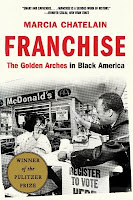
Marcia Chatelain, Franchise: The Golden Arches in Black America (Liveright Publishing, 2020)
Thursday, November 11, 2021
F. Scott Fitzgerald, The Great Gatsby (1925)
Thursday, August 12, 2021
Malcolm Gladwell, The Bomber Mafia: A Dream, a Temptation, and the Longest Night of the Second World War (Little, Brown and Company, 2021).
Malcolm Gladwell is one of my favorite authors, as evidenced by my earlier reviews here, here, and here, but it’s been a while since I’ve dived into something new from him.
A few weeks ago, while browsing mask-free (alas, how short that interval was!) at my favorite big-box bookstore, I stumbled upon Gladwell’s latest offering, The Bomber Mafia. The World War II subject seemed a bit beyond his usual psychosocial playground, but the book looked like a quick read, and besides it was in the “50% off” bin.
Gladwell does not disappoint, coming through again with lessons for the entrepreneur. Though framed as a war story, he seeks an answer to a question with much broader reach: “How is it that, sometimes for any number of unexpected reasons, technology slips away from its intended path?”
Friday, June 11, 2021
Daniel James Brown, The Indifferent Stars Above: The Harrowing Saga of a Donner Party Bride (William Morrow, 2009)
Among the people in what made up the Donner party of emigrants to California in 1846 were businessmen, tradesmen, and farmers, all of whom shared the dream of making it big. Most could have stayed where they were and done well enough in life. Just like many entrepreneurs, they were all driven by a desire to build something bigger in the temperate valleys beyond the Sierra Nevada mountains, so they liquidated their assets and set their sights on new lives in the West.
After a series of bad decisions and just plain bad luck, the party found itself stranded in the midst of those mountains, buffeted by extreme snowstorms and unusually cold weather. Some continued to struggle against nature to get over the mountains, others dug in for the winter, but sooner or later exhaustion and the specter of starvation led to otherwise unimaginable consequences in this well-known story.
The few who survived the ordeal did attain a fair amount of success and wealth as Californians, but for the most part they never overcame the psychic wounds of this experience.
I’m not saying The Indifferent Stars Above presents a parable from which entrepreneurs can draw valuable life lessons, although the story does speak to the value of careful planning and performing proper diligence (maybe even with the assistance of your skilled lawyer…) before choosing a path. Instead, as I read this book during the depths of the pandemic, I was reminded of the resilience of the human spirit — and that, as frightening and trying as things were at that moment, at least I wasn’t stranded on a mountain in a blizzard with nothing to eat.
Wednesday, March 24, 2021
Bill Flanagan, Fifty in Reverse (Tiller Press, 2020)
OK, I’ll admit that I have a particular penchant for tales of time travel. That said, I have resisted visiting this genre for almost nine years, with my review here being my last that touches on a story of this type. I’ve revisited another favorite topic, the 1970s, much more recently here. A whole host of Wonder Years have flowed under the bridge since I’ve read something that has combined both favorite topics.
But here’s the thing: Fifty in Reverse is more than the sum of these two parts. Here’s the story of a sixty-something empty nester who goes to sleep in 2020 and wakes up as his 15-year-old self in 1970, fully aware of his circumstances and the future that lies ahead of him. This is a story for all of us for whom the past year has seemed somehow unhinged in time. Show of hands: who else has experienced a perpetual Groundhog Day feeling as they’ve gone about their daily business over the past year?
The fantasy, of course, is that, with fifty-some years of foreknowledge going for you, you’d be set to profit handsomely from both the ups and the downs of the economy. It would be an entrepreneur’s dream. Imagine knowing what the next big thing is going to be before anyone else is even three steps behind you. Maybe that’s what it was like to be Steve Jobs (or maybe he was just seemingly always able to create the next big thing…)
That’s not how this story works out, though. No spoilers here, but this is a fresh take on the time-travel theme, particularly suited for pandemic homebound readers.
Thursday, January 14, 2021
Greg Sestero & Tom Bissell, The Disaster Artist: My Life Inside the Room, the Greatest Bad Movie Ever Made (Simon & Schuster, 2013)
In my book reviews over lo these many years, I’ve often expanded on the commonly accepted notion that entrepreneurial activity is exclusively economically oriented — that an entrepreneur is someone who builds a successful business starting from scratch, typically as a result of exploiting a new-found market niche or, more prosaically, by building a better mousetrap.
And now, as Monty Python would say, for something completely different.
The blurb for this book describes the subject film, “The Room,” as “the Citizen Kane of bad movies.” I have to confess that I haven’t seen it. My curiosity was piqued when James Franco won a Golden Globe in 2017 for his appearance as Tommy Wiseau, the driving force behind “The Room,” in the movie made from this book.
The typical entrepreneurial scenario involves someone with a great idea but not necessarily the financial wherewithal to exploit it, leading to a story filled with successive rounds of venture financing and innumerable compromises along the way. “The Disaster Artist,” by contrast, is the story of a man with a dream and plenty of money, enough that he doesn’t need to refine his vision to satisfy others. The statistics tell the story: the film had a budget of $6 million, and box office receipts of $1,800 (yes, that’s the correct number) in its original release.
The film has gone on to achieve cult status as the best bad movie ever. The book is an entertaining view of what happens to an entrepreneur and his idea when he or she does not need to deal with the reality check that is the marketplace.
Wednesday, December 9, 2020
Daniel Kahneman, Thinking, Fast and Slow (Farrar, Strausand Giroux, 2013)
If you are like me (and most of Daniel Kahneman’s subjects), you answered this question easily, quickly, and incorrectly. Most of the population answers this way — that the bat costs $1.00 and the ball costs $0.10. Return to the problem and you can see that this answer is incorrect. Very simple math reveals the correct solution: that the bat costs $1.05 and the ball costs a dollar less at $0.05.
This simple experiment showcases the central question of Thinking, Fast and Slow: why does the mind sometimes use answers it knows to be false as solutions to questions it is most certainly capable of answering correctly? Daniel Kahneman, the Israeli psychologist and Nobel Prize winning economist, answers this question by examining the irrationality of the human mind in his international bestseller, Thinking, Fast and Slow.
Kahneman’s book takes the reader on a tour of the human mind — urging the reader to take a step back and examine their own irrationality, to tap into the benefits of what he calls “slow thinking.” He begins by describing the two systems (or characters as he refers to them throughout the book) which govern our thinking. System 1 is fast thinking. It operates automatically and quickly, with little or no effort and no sense of voluntary control. System 2 is slow thinking. It allocates attention to the effortful mental activities that demand it — deliberation and strategic thinking. System 1 is our motor. It continuously generates impressions, intuitions, intentions and feelings. System 2 is our steering wheel — turning those impressions, intuitions and impulses into voluntary actions.
Entrepreneurs, and, frankly, most humans, spend most of their time in System 1 — making decisions, putting out fires and navigating the multitude of minute decisions in our day-to-day lives. A well-developed System 1 is at the core of every entrepreneur — the ability to make snap decisions, follow your gut and irrationally believe that a business will prevail. But oftentimes that is how we end up with a baseball bat that costs 90 cents more than the ball.
Friday, October 30, 2020
Yuval Noah Harari, Sapiens: A Brief History of Humankind (Harvill Secker, 2014)
Is it really possible to fit the history of mankind into a mere 500 pages? Yuval Harari gives it a shot and, while understandably a little light on a granular level, it’s a pretty enlightening journey, even to a history buff like me.
Take, for instance, money — a topic near and dear to every entrepreneur’s heart. Most of us think we know what it is, but really, as Harari tells us, money is an illusion, a social artifact that we all have agreed, consciously or not, will have a certain meaning. Money has no value except that which we give it. It’s all based on trust.
Harari traces the development of money from ancient times, when bags of grain were used as a means of exchange, to the silver coins used during the biblical era. The silver itself had no inherent value. Unlike the grain, you couldn’t eat it, nor did this soft metal serve any other useful purpose, but it was a great deal easier to carry around and store. Fast forward to today, when most money is actually in the form of electronic data (not just credit cards, but Bitcoin!). Even easier to use!
The amazing thing is that this system based on trust is, and always has been, a global phenomenon. Harari says it all: “Money is the only trust system created by humans that can bridge almost any cultural gap, and that does not discriminate on the basis of religion, gender, race, age, or sexual orientation. Thanks to money, even people who don’t know each other and don’t trust each other can nevertheless cooperate effectively.”
Thursday, August 20, 2020
Allen Kurzweil, Whipping Boy: The Forty-Year Search for my Twelve-Year-Old Bully (Harper Books, 2015).
Sometimes you pick up a book out of mild curiosity and discover that it’s a whole lot more interesting than you thought it would be.I expected this book would be a middle-aged man’s reflections about his childhood, perhaps an exploration of how painful experiences had laid the foundation for the wisdom that comes with age. There is this angle, sure, but even more interesting is the story within the story. The bully with whom the author tries to reconnect turns out in later life to have become the shill for a fraudulent international financing scheme that preyed on entrepreneurs who could not find financing to underwrite their dreams. And thereby hangs a cautionary tale for all of us.
The book focuses on the activities of the Badische Trust Consortium, which held itself out to be a 150-year-old private bank based in Switzerland and run by a committee composed of “European aristocrats capable of underwriting loans from $10 million to $500 million.” The author’s nemesis, who did business as a representative of “Barclay Global Investments” (confusingly close to Barclays Global Investors, a legitimate investment banking firm), would lure victims into the scheme. Preliminary meetings would be arranged at the New York offices of a premier Park Avenue law firm, which was duped into lending credibility to the Trust’s operations.